Missing teeth or a loose denture can make you feel like you’re between a rock and a hard place. The choices come down to living with the problem or settling for something uncomfortable. According to the CDC, more than 1 in 10 adults in the U.S. ages 50–64 have lost eight or more teeth, and 15% of adults ages 65 and older have lost all of their teeth. But those numbers don’t tell the whole story. There’s more than one path forward. West Wind Dental offers several types of dental implants to completely restore your smile, and understanding the differences can help you find the one that fits your life.
Types of Dental Implants: How Conventional Implants Work
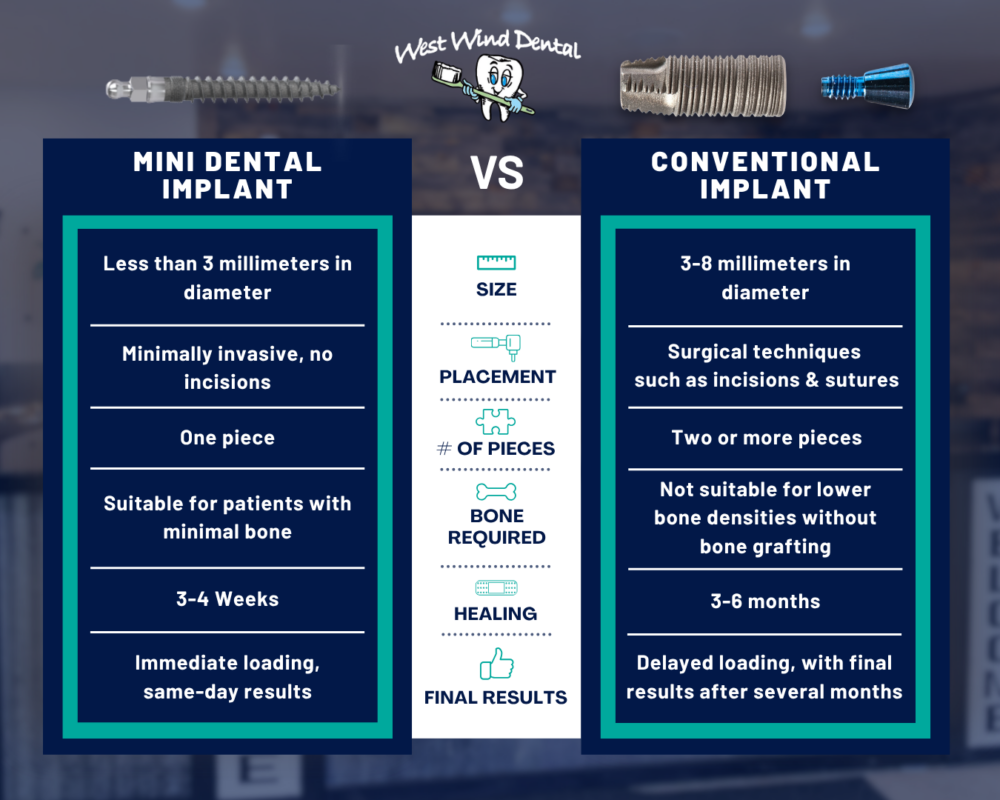
 Traditional dental implants have two separate parts. Dr. Ellis first places the implant body in the jawbone below the gumline. After it heals, usually over four to six months, he uncovers it and attaches an abutment that supports the crown, bridge, or denture. Because conventional implants are wider, they need enough healthy bone for support. If bone grafting is necessary, the process can take several additional months.
Conventional implants remain a dependable option for many patients, but they are not the right fit for everyone. Some patients do not have enough available bone, while others would prefer a shorter, less involved treatment process. In those cases, mini dental implants may provide a simpler, minimally invasive way to replace missing teeth or stabilize a loose denture.
Why Dr. Ellis Recommends One-Piece Mini Implants
Mini dental implants have a narrow, one-piece design, so Dr. Ellis can often place them in areas where a wider conventional implant will not fit. This can make treatment possible for patients who have been told they do not have enough bone for traditional implants.
Mini implants can replace one tooth, several teeth, or support different types of dentures. Because placement is less invasive, there is usually less disruption to the bone and gum tissue and a shorter recovery period. Their flexibility also allows Dr. Ellis to recommend an option that fits the patient’s needs, timeline, and budget.
Dr. Ellis now uses mini dental implants for most of his cases because they offer a reliable, adaptable solution with a simpler treatment process for the patient.
How Minis Make Same-Day Treatment Possible
One advantage of one-piece mini implants is that treatment can often move faster. When there is enough healthy bone after an extraction, Dr. Ellis may remove the tooth and place the implant during the same visit. This allows the area to heal around the implant and may prevent the need for a separate implant procedure months later. When appropriate, a temporary restoration can protect the area until the final crown or bridge is ready.
Dr. Ellis can also use mini implants to stabilize an existing denture. He places O-ring housings inside the denture so it can snap securely onto the implants. The denture remains removable for cleaning, but it stays in place more firmly during daily use.
Learn more on our same-day dental implants page.
How Minis Support a Full-Arch Restoration
For patients who are missing a full row of teeth or struggling with loose dentures, mini implants can support several full-arch options:
- Removable denture: O-ring housings inside the denture snap onto the implants for added stability. You can remove the denture for cleaning.
- Semi-removable roundhouse bridge: Dr. Ellis secures the bridge to the implants. It stays in place during daily use, and he removes it during routine visits for a thorough cleaning.
- Permanent roundhouse bridge: This restoration is cemented in place and cleaned with brushing and a water flosser.
Dr. Ellis may place six to 10 mini implants per arch, depending on the patient’s bone and treatment needs. Using more support points helps spread chewing forces across the restoration. It can also provide added stability if one implant develops a problem.
Learn more on our full arch dental implants page.
Compare Types of Dental Implants With Dr. Robert Ellis
There is no single implant option that is right for every patient. Conventional and mini dental implants each have their place, and the best choice depends on your health, goals, and budget. Schedule a free consultation with Dr. Robert Ellis at West Wind Dental to review your options and find a solution that fits your needs.