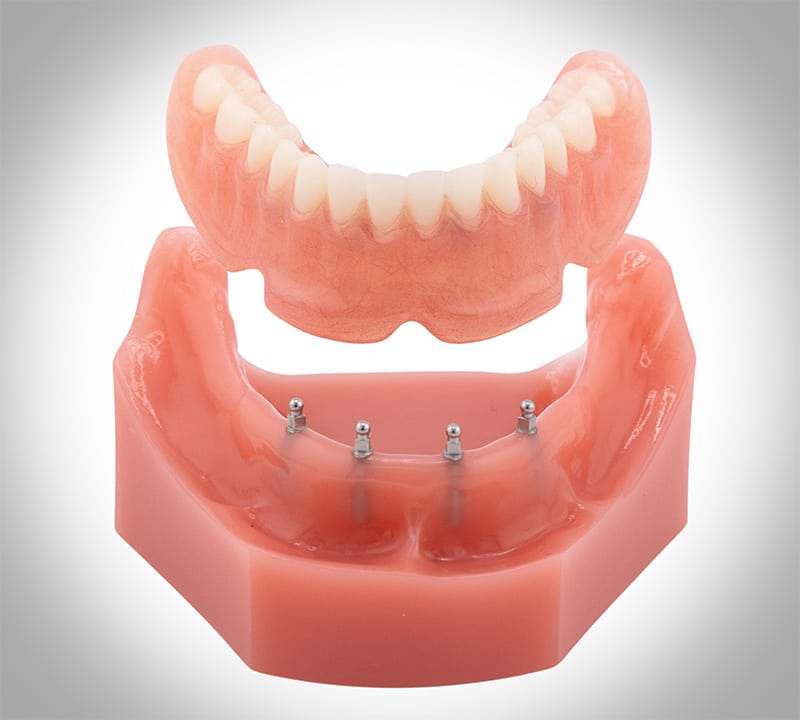
Dentures and plumbing may not seem to have much in common, but Dr. Robert Ellis knows that a solid foundation makes all the difference. With his background in construction, he understands the value of thinking ahead. You wouldn’t want to tear everything apart each time you make an improvement to your home, and the same idea applies to replacing missing teeth. Mini dentures give you an affordable place to start, using small titanium implants to hold a removable denture firmly in place. If you decide later that you’d prefer something more permanent, those same implants may be able to support an upgraded restoration.
At West Wind Dental, Dr. Ellis takes the time to understand what you want from your new teeth. He’ll evaluate your oral health, discuss your budget, and help you choose an option that meets your needs today while keeping future possibilities in mind.
What ‘Mini’ Means in Mini Dentures
 The word “mini” refers to the implants, not the denture. Their slim, one-piece design allows Dr. Ellis to place them with less disruption to the surrounding bone and gum tissue, even in patients with limited jawbone. Traditional dentures rely on suction to stay in place, which can become less reliable as the jawbone changes. Mini dentures attach to implants anchored in the bone, keeping them more stable when you eat and talk.
Can Mini Dentures Be Upgraded to Permanent Teeth?
Absolutely! One advantage of mini dentures is that the implants can stay in place even if you decide to change your denture later. Their small size also makes it easier for Dr. Ellis to add implants if your new restoration needs more support.
As Dr. Ellis explains, “It’s way easier to add implants with the mini configuration than it is with traditionals.” His background in construction has taught him the value of a strong foundation, and his years of experience placing implants have shown him how useful that flexibility can be.
You can start with a more affordable snap-in denture and see how it works for you. If your needs or budget change, you may be able to upgrade to a stronger material or a permanent set of teeth without replacing the implants you already have.
What the Upgrade Path for Mini Dentures Looks Like
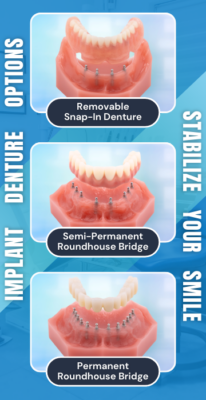
Every patient’s mouth is unique, but the upgrade steps are generally the same. When considering implant dentures, there are three tiers: snap-in, semi-removable, and permanent.
Starting With a Snap-In Denture
A snap-in denture is the most affordable implant denture option we offer. If you already have a denture that’s in good shape, Dr. Ellis can often modify it to fit over your new implants. He places small housings with rubber O-rings inside the denture, allowing it to snap securely onto the implants. This can be done the same day your implants are placed, saving you the cost of a new denture.
If you need a new denture, Dr. Ellis can have one made from acrylic. You’ll wear a temporary denture while the lab makes your final one. With either option, you can remove your denture at home for cleaning and give your gums a rest overnight.
Stepping Up to a Semi-Removable Porcelain Bridge
If you’d prefer something less bulky, you can upgrade to a semi-removable porcelain bridge. It attaches to your implants using the same rubber O-ring system as a snap-in denture.
Porcelain is stronger and more durable than acrylic. While acrylic dentures typically need replacing every seven to 10 years, a well-maintained porcelain bridge can last a lifetime.
Another advantage is that you don’t have to take it out at home. Instead, Dr. Ellis removes the bridge during your routine checkups, gives it a thorough cleaning, and secures it back onto your implants.
Finishing With a Permanent Roundhouse Bridge
The final upgrade is a permanent roundhouse bridge, a full arch of ceramic teeth that stays in your mouth. Dr. Ellis can use your existing implants and add more if needed to support the bridge. Once everything is ready, he cements it permanently in place.
You care for your new teeth by brushing daily and using a water flosser to clean underneath the bridge.
A roundhouse bridge costs more than the other options, but it’s also the most durable and feels the most like natural teeth. At West Wind Dental, Dr. Ellis will help you decide if it’s the right choice based on your oral health, preferences, and budget.
Questions To Ask at Your Mini Denture Consultation
Dr. Ellis wants you to feel comfortable with your treatment plan and understand your options before deciding. During your free consultation, he’ll be happy to answer questions about future upgrades, including:
- Future support: Can my current implants help hold a fixed bridge later?
- Added implants: About how many more would I need to upgrade?
- Your current denture: Is it strong enough to retrofit, or should we plan a reinforced one?
- Timing: What signs will tell me it’s time to move up?
You don’t need to have everything figured out before your visit. Dr. Ellis will help you decide where to start based on your needs and what you want for your smile.
Plan for Your Future Smile With Mini Dentures
A solid foundation leaves room for changes later. With mini dentures, you can start with an affordable snap-in option and upgrade to permanent teeth when you’re ready. Dr. Robert Ellis will help you plan for your current needs and future goals. Schedule your free consultation at West Wind Dental in Rigby, Idaho, to explore your options and find a solution that fits your smile and budget.