
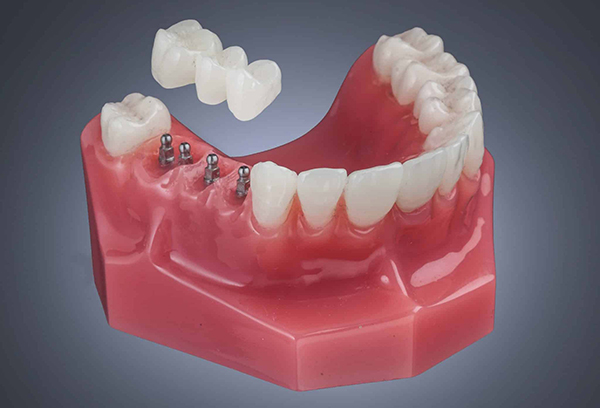
A dental bridge is a type of dental appliance that replaces a row of missing teeth, “bridging” the gap in your smile. But what is the difference between a traditional bridge and an implant bridge?
The key difference between the two is that a traditional bridge attaches to your healthy teeth, while an implant bridge connects to dental implants that anchor into your jaw. This structural change has significant consequences for your overall smile. Unlike traditional options, implant bridges help reduce bone loss and prevent tooth wear.
How Traditional Bridges Replace a Row of Missing Teeth
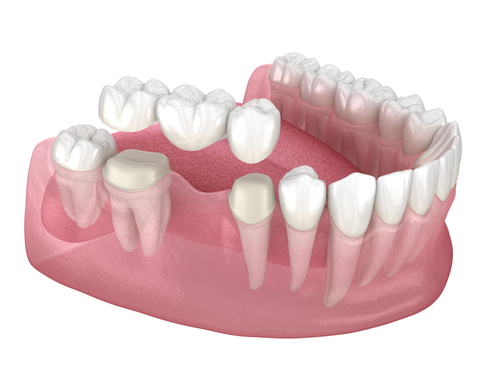 Traditional bridges are one option to replace a row of teeth. On each end of the bridge is a crown that attaches to healthy teeth on either side of the gap. These healthy teeth are called abutment teeth.
This approach is common, but it has some drawbacks.
First, traditional bridges impact nearby natural teeth. When we place crowns on healthy teeth, we remove some enamel so they fit properly. This permanently alters the tooth structure.
Another issue is that traditional bridges change how your bite distributes pressure. Because they anchor onto neighboring teeth, these abutment teeth bear more stress from biting and chewing.
As a result, the teeth that support a bridge tend to wear faster and are more prone to fractures.
This damage creates a new problem: since the bridge relies on those abutment teeth for support, any weakening can reduce its stability. Unfortunately, that means the bridge will need to be replaced. Typically, a traditional bridge has a lifespan of about 5-15 years.
Most important to your long-term oral health is the fact that traditional bridges don’t prevent bone loss. You probably don’t realize that the roots of your teeth play a role in your jaw’s health. But they actually stimulate the jaw when you bite and chew, keeping it strong and healthy. Once you lose teeth, your jawbone loses this stimulation and begins to shrink. Over time, this can change your appearance, affect how your dental work fits, and make future treatments more difficult.
Why an Implant Bridge Outperforms a Traditional Bridge
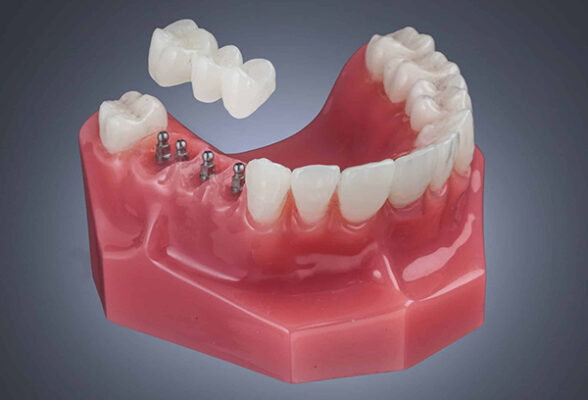
Traditional bridges are just one option for replacing a row of missing teeth. Another option is implant-supported bridges, which serve the same purpose but work differently. Instead of attaching to neighboring teeth, an implant bridge attaches to dental implants, leaving neighboring teeth untouched.
To place an implant bridge, we position titanium implants into the jawbone. We don’t need to make any changes to healthy teeth.
By anchoring to your jaw with implants, an implant-supported bridge also distributes bite pressure more evenly across all teeth. This prevents the neighboring teeth from having to endure extra strain. As a result, your healthy teeth won’t be negatively affected by an implant bridge.
Because it doesn’t wear down its supporting structure, an implant bridge has a lifespan of 15+ years. With proper care, it might even last a lifetime.
Once your implant bridge is securely in place, you’ll be able to chew and bite with natural pressure. Since the implants are anchored in your jawbone, they restore the same kind of stimulation that tooth roots once provided. This healthy stress helps keep the jawbone strong and prevents further bone loss. Unlike traditional bridges, implant-supported bridges protect both your bite and your long-term jaw health!
Mini Implants Work for Patients With Bone Loss
Sometimes, patients hear they’ve lost too much bone to restore their teeth with implant bridges. They might be told that traditional bridges are the only option.
If this sounds like you, consider mini dental implants. Most patients are candidates for mini implant bridges, even if they’ve experienced bone loss. This is because mini implants are more than 40% smaller than conventional implants. Because of their reduced size, they can successfully fit into smaller jawbones and tight spaces.
This is great news if you’re already dealing with jawbone deterioration. With mini implant bridges, you’ll be able to keep the rest of your jawbone healthy and help prevent additional loss.
When you come in for a dental bridge consultation, Dr. Ellis will discuss all your options with you so you can make an informed choice. He will consider the overall structure of your mouth and help you choose the longest-lasting, least invasive option for your unique smile.
Schedule a Free Implant Bridge Consultation To Learn More
Implant bridges bring back the strength and stability your smile needs. They do more of the heavy lifting than traditional bridges, protecting your bite and the bone beneath it.
If you’ve been told you don’t have enough bone for implant bridges, mini dental implants may be a good option! Because they’re so slim, most people qualify for them. That means you may be closer to a stronger, more stable smile than you think.
Ready to explore your tooth replacement options? Dr. Ellis is happy to assess your unique smile goals to find the best solution. Come in for a free consultation to learn more!
