Dentures in Idaho Falls, ID
West Wind Dental in Rigby provides affordable dentures for patients in Idaho Falls and throughout Eastern Idaho
Losing teeth changes more than just the way your smile looks. It affects how you eat, speak, and feel about yourself. For many people, dentures become the first step toward getting back some of that comfort and confidence. But if you’ve worn them, you already know they don’t always feel as natural as you’d like. At West Wind Dental, we meet patients every day who are looking for answers: What type of denture is right for me? How long will it last? Is there something more stable than what I have now? The good news is, you have options, and we’re here to help you find the one that fits your life best.
What Are Traditional Dentures?
Traditional dentures have helped folks restore their smiles for generations. These custom-made appliances replace a full arch of missing teeth and help people eat, speak, and smile with more ease. They rest on the gums and come in two main types: full and partial.
Full Dentures
Full dentures replace all of your upper or lower teeth. They’re often made from acrylic and sit snugly on a gum-colored base. Upper dentures rely on the roof of the mouth for support, covering the upper palate. Lower dentures sit along the jawbone.
These dentures often become part of your daily routine. You take them out at night to clean them and give your gums a rest. With the right care, they can last several years and offer a way to regain function after complete tooth loss.
Partial Dentures
Partial dentures fill in the gaps when someone still has some natural teeth remaining. They use small clasps (often metal or acrylic) that gently hook onto nearby teeth for support. Like full dentures, they’re removable and made to blend in with your natural smile.
Many patients choose partials because they’re affordable, easy to adjust, and a familiar option that fits into everyday life.
Traditional Denture Limitations
While traditional full dentures remain a common solution for tooth loss, they come with several limitations, many of which stem from a lack of stability. Because they sit on top of the gums, these dentures often shift, leading to the following challenges:
- Speech becomes more difficult when dentures move or click during conversation.
- Biting and chewing feel limited because dentures can’t replicate the bite force of natural teeth.
- Taste and temperature sensations decrease, especially when upper dentures cover the palate.
- Dentures may slip or shift, leading to embarrassing moments while talking, laughing, or eating.
- Friction against the gums can cause irritation, resulting in mouth sores.
- Many patients rely on adhesives to keep their dentures in place, which can feel messy or unpleasant.
- Changes in fit over time require patients to reline or replace their dentures periodically.
Beyond these daily frustrations, long-term issues can develop:
- Patients can lose or damage removable dentures, especially during cleaning or handling.
- Jawbone loss continues over time, since dentures do not stimulate the bone like natural tooth roots.
Can a Regular Denture Be Converted Into an Implant Denture?
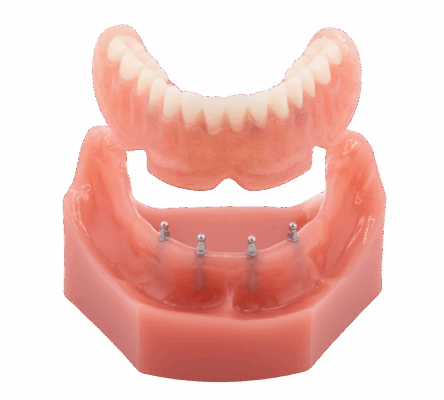
Patients often come to West Wind Dental looking for a better alternative to traditional dentures. They’re worried about instability, poor fit, and the other limitations we’ve outlined above. Many times, patients with conventional dentures will ask if we can simply add dental implants to retain their dentures. They’re sick of the prosthetic sliding around in their mouth and are ready to say goodbye to messy adhesives.
Fortunately, we can tell them yes. In many instances, we can retrofit your existing denture to connect to mini dental implants. What we’ll do is place your mini implants using a gentle, minimally invasive technique. Then, we will adjust the bottom of the denture to receive the housings that snap onto the implants. We can place the implants and convert your denture in the same visit.
For patients without a current denture, we can use a similar method. However, at our office, whenever we make a new implant-supported denture, we include a metal mesh reinforcement. This added support helps prevent fractures, especially since your chewing strength will likely improve more than it has in years.
But how much does all this cost? That’s a common question, and we understand why. Dental care can be expensive. To retrofit an existing lower denture with four mini implants, the cost is typically around $6,000. For the upper, we usually place six implants, so the cost is a bit higher. That said, if this is something you truly want, we do everything we can to help you afford treatment.
Other Implant Denture Options
Some patients prefer not to deal with a denture that they have to take in and out. They’re looking for an implant denture that feels more natural, something that stays in place and becomes part of them again. For those folks, we offer more fixed solutions that provide added comfort, function, and peace of mind.
Semi-Permanent Roundhouse Bridge
The semi-permanent roundhouse bridge (also called the Fix-on-Six® system) offers a stable, long-lasting solution without the daily hassle of removing the denture.
Like a traditional denture, a roundhouse bridge spans from one side of your mouth to the other. It’s another option for full arch restoration. A key difference is in the feel: it’s slimmer, lighter, and far less bulky than a standard denture or even a snap-in denture.
To anchor the bridge, we place 6-10 mini dental implants throughout your upper or lower jaw. Your prosthetic stays securely in place, but we can remove it in the office when it’s time for a deep professional cleaning.
Made from porcelain, this bridge looks much more natural, durable, and stain-resistant.
Permanent Roundhouse Bridge
For those who want the most secure and natural-feeling option, we recommend a permanent roundhouse bridge. This bridge is cemented in place and doesn’t come out. This option sits on 10-12 mini implants and functions the most like real teeth.
It’s also the most stable and longest-lasting of all implant denture choices, offering exceptional chewing power and confidence. Crafted from strong, beautiful ceramic, it’s made to last and designed to blend seamlessly with your smile.
Take the Next Step Toward a Confident Smile
Dentures can restore your smile, but they don’t always feel as secure or natural as you’d like. With today’s implant options, you can enjoy greater stability, stronger chewing, and renewed confidence. At West Wind Dental, we’ll help you choose the solution that fits your life best. Schedule a free consultation today and discover what’s possible for your smile.
Frequently Asked Questions
Implant dentures fix many of the frustrations patients face with traditional dentures. Because they’re anchored to mini dental implants, they don’t slip, click, or move when you talk, eat, or laugh. That extra stability also gives you more bite strength, so you can enjoy foods that were tough to chew before. Plus, they don’t cover the roof of your mouth, so you can actually taste your meals again.
No more messy adhesives or constant relines, either. On top of that, implants help stimulate the jawbone, preventing the bone loss that often happens with regular dentures. It’s a more secure, comfortable, and lasting solution that feels much closer to having your natural teeth back.
Great question, and the short answer is: it depends on your plan. Most insurance providers will cover extractions and a portion of the cost for traditional dentures. Medicaid, for example, usually covers the extractions and the fabrication of upper and lower dentures, but not implants if you opt for an implant-supported solution. Some private insurance plans may contribute toward implants, but that’s less common.
Dental insurance typically works as an annual benefit, usually ranging from $1,000 to $5,000 per calendar year. Because of this, some patients plan their treatment in stages, using part of their benefit one year, then finishing up the next. We’re happy to check your benefits for you and help you maximize your coverage.
The lifespan of dentures can vary, but on average, traditional dentures last between 5 and 10 years. Over time, changes in your mouth (like natural bone loss) affect how dentures fit, which is why they may need relining, adjustments, or even replacement.
Implant-supported options, on the other hand, tend to last much longer since the implants protect your bone structure and keep the denture more stable. No matter which option you choose, regular checkups at West Wind Dental will help extend the life of your dentures and keep your smile in great shape.
Related Videos
- What Types of Dentures Are Available at West Wind Dental?
- Can a Regular Denture Be Converted Into an Implant Denture?
- What Are the Best Options If I Have No Teeth?
- What Is the Process for Getting Implant Dentures?
- What Is a Snap-In Denture?
- What Is a Semi-Removable Denture?
- What Are All-on-Four Dental Implants?
- How Does Fix-on-Six Compare to All-on-Four?
- What Is a Roundhouse Dental Bridge?
- How Do I Care for My Implant-Supported Denture?
- How Much Do Implant Dentures Cost?
- Does Insurance Cover Implant Dentures?
- Does West Wind Dental Offer Payment Plans for Implant Dentures?
- Who Is a Candidate for Full-Mouth Reconstruction?
- What Procedures Are Included in Full-Mouth Reconstruction?