
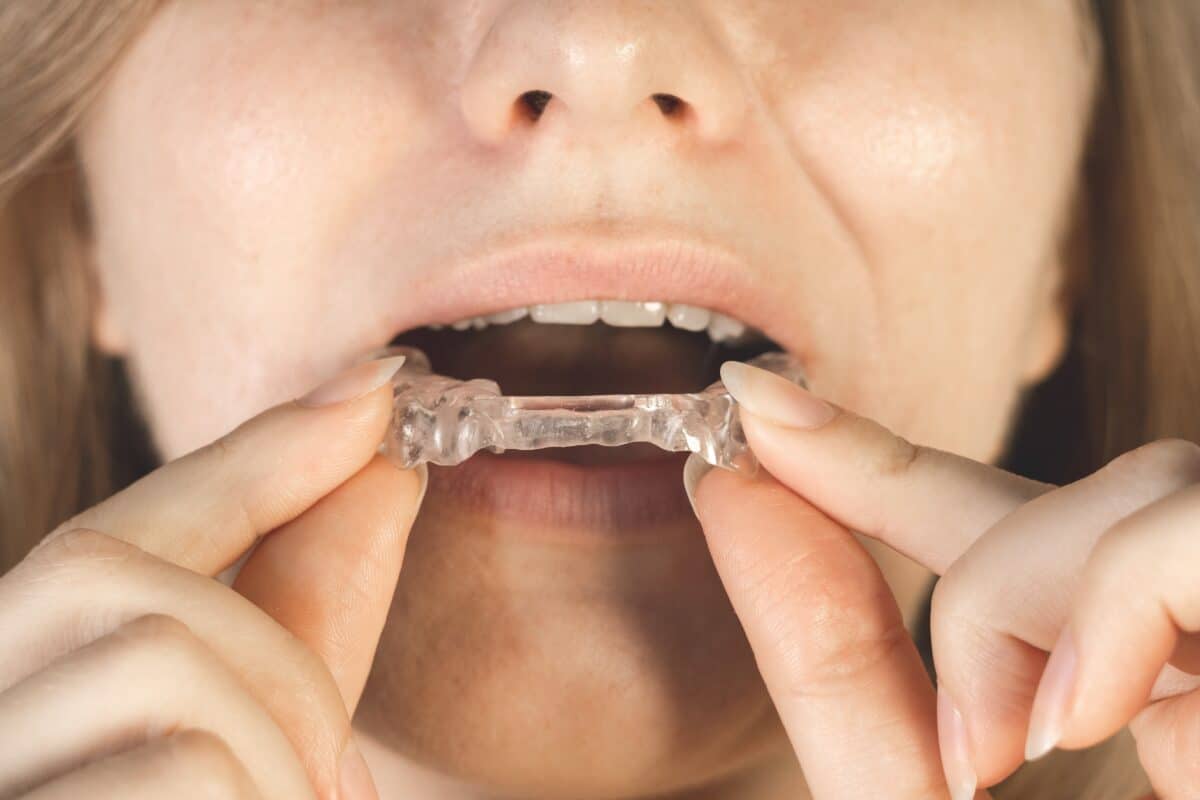
You struggle with jaw pain, clicking, and popping. You might think you have TMJ, but what you’re actually thinking of is TMD. TMJ stands for temporomandibular joint, which is the hinge joint of your jaw. The “D” in TMD stands for “disorder.” TMJ disorder can be brought on by malocclusion, clenching from stress, chewing on harder things that aren’t food, or otherwise using your teeth for a different function than what teeth were designed for. You may have heard of a TMJ splint, but is that really the best way to ease your symptoms?
That depends on what’s causing your pain. TMJ disorder can be caused by many factors, which means treating that pain takes a thoughtful strategy that might involve ruling out other treatments first. Here’s where a TMJ splint fits into Dr. Ellis’s approach to treating jaw pain.
Start With Behavior Modification
The first step to addressing TMJ starts with correcting bad habits that could contribute to TMJ pain. Behavior modification is a simple, noninvasive way to improve TMJ disorder.
Do you use your teeth to rip open packages or bite through plastic? These habits seem harmless, but they can actually add unnecessary strain to the teeth. Our teeth are not tools.
Other behaviors that can contribute to TMJ problems include chewing on gum, ice, or non-food items (like pen caps). Aggressive chewing or grinding can strain your jaw.
What habits would we want you to pick up? We recommend keeping a small space between your teeth at all times. Our teeth shouldn’t touch unless there’s food between them. In the hustle and bustle of daily life, many patients don’t realize they may be slamming their teeth together throughout the day. That can exacerbate a temporomandibular joint problem.
For some patients, improving behaviors may be enough to ease the symptoms associated with TMJ disorder. But other patients, especially those who clench or grind their teeth at night, might benefit from a TMJ splint.
When a TMJ Splint May Help
 The next item in our arsenal is a TMJ splint that you’ll wear at night to help relax that joint. A TMJ splint is a removable appliance that snugly fits over your upper or lower teeth. It creates a protective surface between them, helping prevent direct tooth wear from grinding.
Based on his dental experience, Dr. Ellis often recommends a splint for patients with jaw muscle pain, especially when clenching or grinding is also a concern.
In follow-up visits, Dr. Ellis checks the TMJ splint’s fit and whether your symptoms are improving. For best results, stick to the healthier behaviors we mentioned before, in addition to wearing the splint nightly.
Combining this noninvasive treatment option with behavior modification may work for some patients, but if pain persists, Dr. Ellis can move on to other interventions.
Consider Masseter Botox®
If a TMJ splint doesn’t suit your needs or your symptoms continue, Dr. Ellis will reassess what may be contributing to your discomfort. Our practice also offers masseter Botox®, which temporarily relaxes the masseter muscles, the large muscles on the sides of your jaw that help you chew.
A TMJ splint and Botox work differently. A TMJ splint provides a protective surface between your teeth, while TMJ Botox relieves muscle tension rather than protecting your teeth directly. TMJ Botox doesn’t replace a splint’s role in preventing grinding-related tooth damage.
To treat TMJ pain with Botox, Mary Ellis, our registered nurse and Dr. Ellis’ wife, administers the injections during a quick visit. Botox’s effects are temporary, lasting around three to six months. Moreover, it doesn’t permanently teach your jaw muscles to stop clenching. Still, Dr. Ellis and his team have helped patients ease TMJ pain through Botox injections.
Learn More About the TMJ Splint and Other Treatment Options
With so many possible causes of jaw pain, finding the right treatment starts with understanding what’s contributing to your symptoms. Sometimes, simple changes to your daily habits can make a difference. Other times, a TMJ splint may help relieve muscle tension and reduce discomfort.
At West Wind Dental in Rigby, Idaho, Dr. Robert Ellis takes the time to evaluate your symptoms and determine the best approach for you. If you’re struggling with jaw pain, contact our office today to schedule a free consultation and learn more about your treatment options.
