If you’ve worn dentures for a while, you may feel like you’re always dealing with the same issues. They work, but they can still move when you chew, and that takes the enjoyment out of eating and the comfort out of social time. We see this a lot, and there are more stable options nowadays. A permanent denture stays anchored, so most patients chew better and feel more confident day to day. The goal is simple: help you eat and talk without thinking about your dentures.
What Is a Permanent Denture?
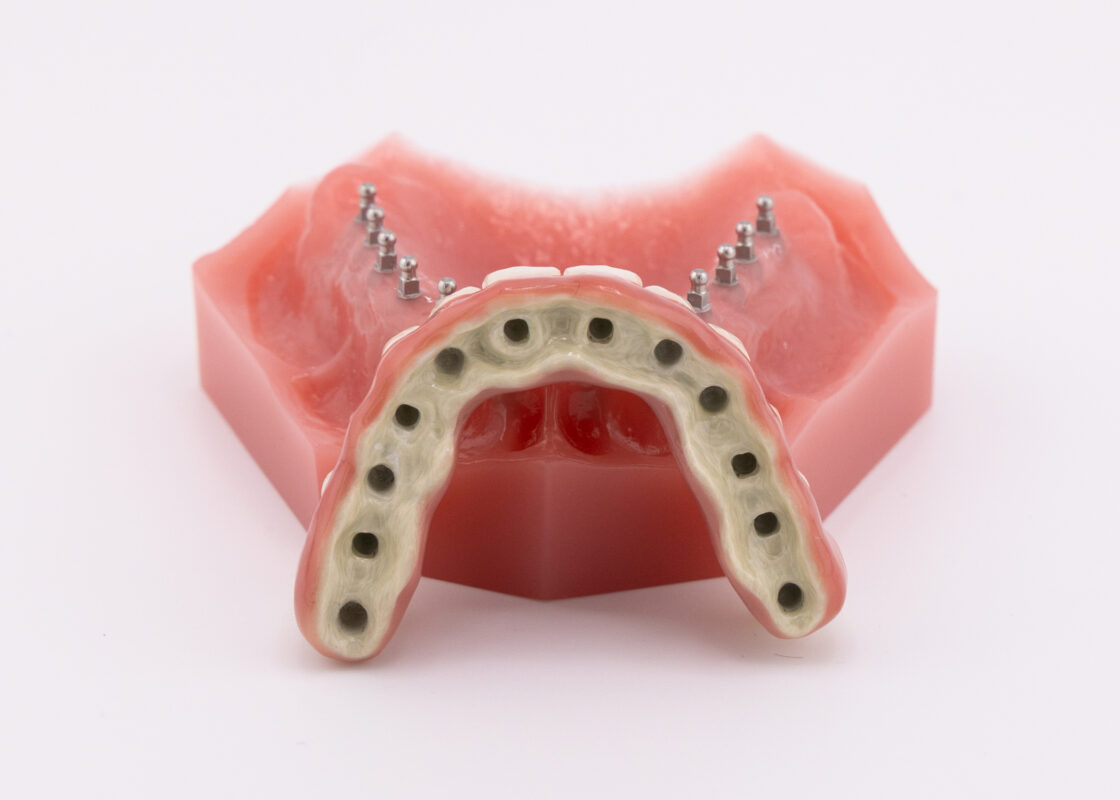
Unlike a traditional denture that sits on your gums, a permanent denture anchors to your jawbone using small-diameter dental implants. What you get is less slipping, less rubbing, and more confidence when you eat.
When we say “permanent,” we’re mainly talking about the implants. Mini dental implants are titanium and built to last a long time. The denture itself is strong, but it’s still a dental appliance. It can wear over time and may need maintenance or replacement down the road. Take care of it at home and keep up with your checkups, and most patients get many years of solid use before anything needs attention.
Next, let’s compare them to traditional dentures.
Permanent Dentures vs. Traditional Dentures
If you wear traditional dentures, you already know the common problems. They can slip when you eat, rub sore spots, and leave you relying on adhesive just to feel secure. Over time, the fit can change, and chewing can get harder. For a lot of people, it starts to feel like the denture is running the day.
Permanent dentures are different because they’re anchored with implants. That stability usually means no adhesive and far less movement. Most patients can chew better and feel more comfortable in everyday situations, especially at meals.
One honest note: this option does require a procedure and a short healing period. Dr. Ellis will first make sure it’s safe for you, and once it is, he’ll plan everything out so you know exactly what to expect.
How the Process Works at West Wind Dental
The permanent denture process is pretty straightforward and can be completed in roughly 3 months . Dr. Robert Ellis has been placing implants and restoring smiles for a long time, and he focuses on doing things the safe, predictable way.
- Consultation and 3D scan: He’ll examine your mouth, take a CBCT scan, and map out a plan. You’ll also go over timeline, cost, and financing.
- Implant placement: At the next visit, Dr. Ellis will remove the teeth if needed, and then implants are placed.
- Healing: Most patients heal for about 4 to 8 weeks while the implants bond with the bone.
- Final teeth: Once you’re healed, you’ll come back for your final denture. Dr. Ellis will check your bite and make any adjustments needed for comfort.
- Aftercare: Daily brushing and a water flosser help keep everything clean and working well.
Before any of that happens, though, Dr. Ellis needs to make sure permanent dentures are the right fit for you.
Are You a Candidate for a Permanent Denture?
Most people are, or can become, candidates for implant dentures. During your free consultation, Dr. Ellis will help to determine if you qualify after a thorough examination. Candidacy essentially depends on two main factors: bone condition and overall health.
Bone Volume and Mini Dental Implants
Unlike traditional dental implants, small-diameter dental implants require significantly less bone. Plus, their smaller size lets Dr. Ellis place them in areas where traditional implants would require additional procedures like bone grafting. If you’ve been turned away at other practices for insufficient bone, it isn’t the end. We’d be happy to see you and explore your options during your free consultation.
Health Conditions and Habits That Can Affect Candidacy
Mini dental implant treatment can become complicated by certain diseases, oral conditions, lifestyle habits, or other medical treatments.
Certain factors that can affect treatment are:
- Smoking
- Uncontrolled diabetes
- Bone disease, such as osteoporosis
- Bleeding/clotting disorders
- Active gum disease
- Autoimmune diseases
- Chemotherapy
If any of these apply to you, it doesn’t automatically rule you out. Patients aren’t checklists. The only way to know is to sit down and talk it through. Dr. Ellis will do an exam, review your health history, and make sure the plan is safe and makes sense for you. If they’re not the right fit, he’ll be upfront about that.
Once you find out you’re a candidate, cost is usually the next thing on patients’ minds.
How Much Does a Permanent Denture Cost?
Cost isn’t just the price tag. It’s what you’re getting for that investment and how long it’s likely to hold up. Traditional dentures usually cost less up front, but they often need relines, repairs, and replacement over the years. Yes, implant-retained dentures cost more upfront, but the stable fit and long-term function are what most patients tell us make it worth it.
Your final cost depends on things like:
- How many implants you need
- Whether you need extractions
- What material you choose for the final denture
We accept most dental insurance plans, but keep in mind that many have a $2,000 yearly maximum, so coverage only goes so far. If you’d like to break it up into monthly payments, third-party financing may be available for qualified patients. Either way, we’ll lay out the options clearly and help you choose what fits your budget.
Schedule Your Free Consultation in Rigby, ID
Permanent dentures won’t just put teeth back in your mouth. They’ll give you back the moments you’ve been quietly sitting out. Contact West Wind Dental today to schedule your free consultation with Dr. Ellis. We’d love to meet you and see how we can help.